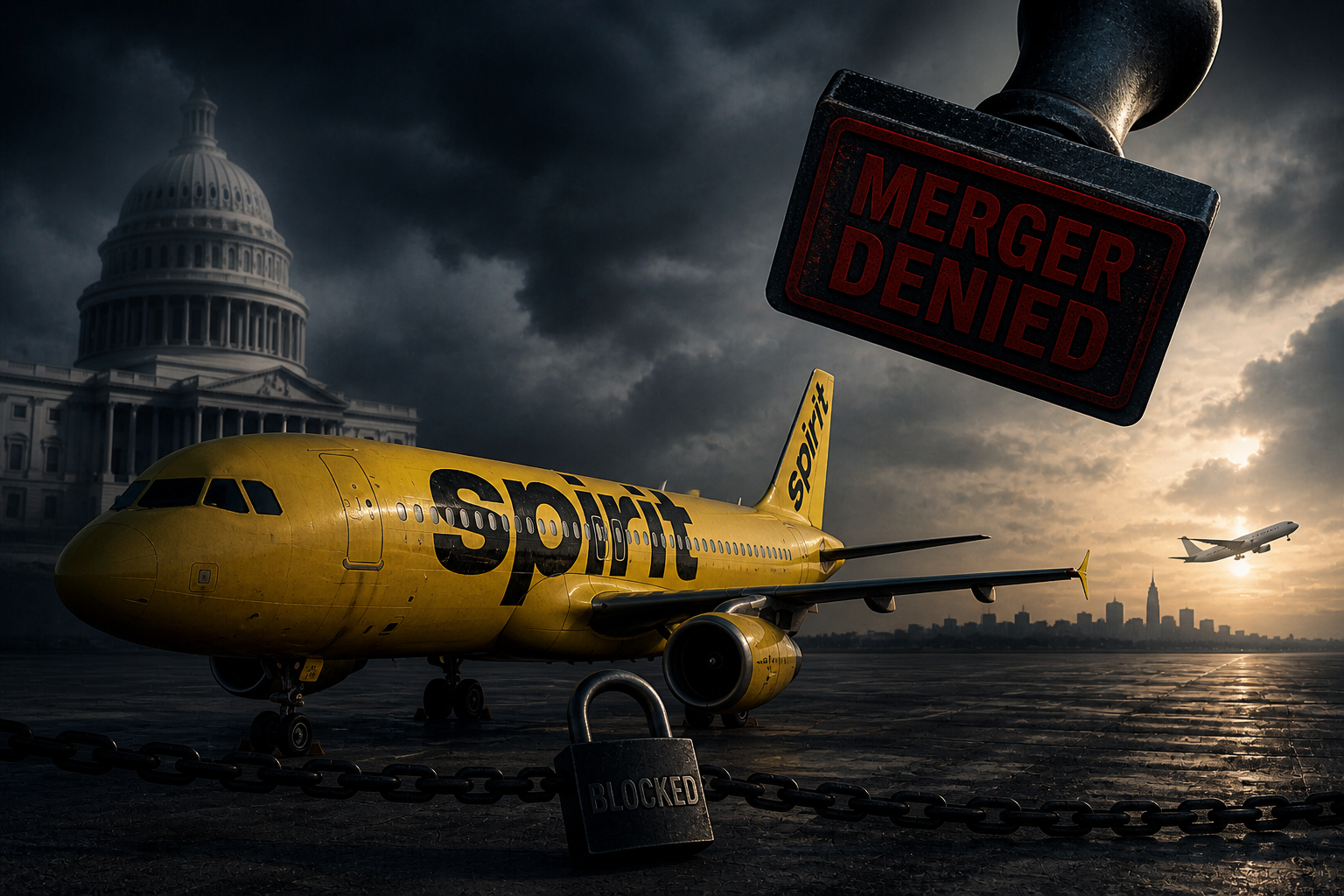
Spirit Airlines, a pioneer of ultra-low-cost travel that delivered rock-bottom fares to millions of Americans, ceased all operations on May 2, 2026, after 34 years in business. The airline canceled every flight, laid off roughly 17,000 employees, and left passengers stranded. The Biden administration bears direct responsibility for hastening Spirit’s demise by deliberately blocking its only realistic path to survival.
The Merger They Killed
In 2022, JetBlue agreed to buy Spirit for $3.8 billion. The combination would have created a more formidable low-cost competitor to the Big Four airlines, providing Spirit with JetBlue’s stronger balance sheet, operational expertise, and financial stability.
The Biden Justice Department sued to block the deal in 2023. Pete Buttigieg’s Department of Transportation went even further, actively supporting the lawsuit, an aggressive intervention that helped kill the merger. In January 2024, a federal judge blocked the acquisition. Biden and Buttigieg publicly celebrated the decision as a victory for consumers.
By killing the JetBlue merger, the Biden administration removed Spirit’s best and arguably only chance at long-term survival.
Spirit’s Rapid Decline After the Block
Stripped of the merger lifeline, Spirit spiraled. The airline filed for Chapter 11 bankruptcy protection twice in late 2024 and 2025. Without access to JetBlue’s capital and synergies, it could not overcome its mounting losses, debt burden, and operational challenges. A potential federal bailout under the new administration ultimately did not materialize, and Spirit was forced to shut down entirely.
Government Should Stay Out of Private Industry
This episode underscores a fundamental truth: government should not get involved in private industry. The Biden administration’s heavy-handed antitrust interference distorted the free market, preventing a private merger that could have saved the company. Markets, not bureaucrats in Washington, should decide which businesses survive.
The Trump administration is doing the right thing by refusing a taxpayer-funded bailout. While talks occurred, no deal was finalized, avoiding the moral hazard of using public money to prop up a failing business. This disciplined approach respects taxpayer dollars and lets market forces work, even when the outcome is painful.
A Self-Defeating Attack on Low-Cost Travel
The Biden team claimed blocking the merger would protect competition and keep fares low. In reality, they eliminated one of the most aggressive price competitors in the industry. The “Spirit Effect” where Spirit’s dirt-cheap fares forced other airlines to cut prices is now diminished. Travelers are left with fewer options and likely higher fares on many routes.
Transportation Secretary Sean Duffy and other critics have rightly slammed Buttigieg and Biden for bragging about a decision that directly contributed to the collapse of a major low-cost carrier. Instead of more competition, Americans got less.
The Bottom Line
The Biden administration screwed Spirit Airlines. By using the power of the federal government to block its merger with JetBlue, they removed the airline’s clearest path to survival and accelerated its shutdown. What they called a “win for consumers” has delivered the opposite result: fewer flights, lost jobs, stranded passengers, and reduced pressure on fares.
Spirit is gone because the Biden administration made sure it couldn’t be saved through private means. This is government intervention at its most counterproductive and a reminder that politicians should keep their hands off private industry.

Websites, hosting, email & digital tools for growing brands.