Conclusion
Facts point to President Obama and Biden getting played and empowering terrorism. If they did not get played then they were in on it – that is much harder to believe.
We cannot believe terrorists.
They have one objective which is the destruction of the free world.
They will say and do anything to move their objective forward.
The leadership cannot be trusted.
They murder their own citizens and rule through fear and violence.
Strategic Response
Enter President Trump with the objection to remove and annihilate this frame of mind from existence. There is no other way. IRAN has not followed any agreement making their stance perfectly clear and now President Trump with the backing of the majority or Americans and most countries is going forward with this termination. Regardless of the left media spin, who for god only knows how they could hate a man so much that they would prefer terrorism to continue, tries to play this off as something no one wants even after the people have spoken.
Documented Facts and Outcomes
In plain facts drawing from IAEA reports, U.S. Treasury data, congressional records, and declassified intelligence assessments the following outlines documented actions and outcomes related to U.S. policy toward Iran.
JCPOA Implementation (2015–2018)
• Iran received access to approximately $100–150 billion in frozen assets, primarily its own oil revenues previously held abroad, according to U.S. Treasury estimates.
• Iranian oil exports increased from approximately 1.1 million barrels per day before the deal to about 2.5 million barrels per day by 2017, according to U.S. Energy Information Administration data.
• The International Atomic Energy Agency (IAEA) verified reductions in Iran’s nuclear program including:
- Centrifuges reduced from roughly 19,000 to approximately 5,000
- Uranium stockpile reduced from roughly 12,000 kilograms to approximately 300 kilograms
However, the agreement did not include restrictions on ballistic missiles or proxy activity.
Documented activity during this period included:
• 14 ballistic missile tests conducted by Iran after the deal, according to U.S. State Department counts.
• Continued funding for proxy groups such as Hezbollah, estimated at approximately $700 million annually according to U.S. intelligence assessments.
Non-Compliance Incidents
IAEA documentation recorded several incidents during the agreement period.
Examples include:
• Iran exceeding heavy water limits in 2016.
• Inspectors encountering access limitations at military locations including Parchin between 2015 and 2017.
Iran also conducted advanced centrifuge research and development permitted under the agreement.
According to assessments by the IAEA and the U.S. Intelligence Community Annual Threat Assessment, the estimated nuclear breakout timeline during the JCPOA period was approximately 8–10 months, compared with 2–3 months before the agreement.
Post-Withdrawal Outcomes (2018 Onward)
After the United States withdrew from the JCPOA in 2018 and sanctions were reinstated:
• Iran’s economy contracted approximately 6–7 percent annually, according to World Bank data.
However, nuclear program activity expanded.
Documented developments include:
• Centrifuge numbers increasing again to approximately 10,000 or more by 2020.
• Uranium enrichment increasing to 20 percent and later to 60 percent.
Biden Era (2021–2025)
During this period:
• Sanctions enforcement on oil exports loosened.
• Iranian exports reached approximately 1.5–2 million barrels per day by 2023, according to U.S. Energy Department data.
• These exports generated approximately $80–100 billion in revenue, according to U.S. Treasury analysis.
Meanwhile:
• Uranium enrichment reached 60 percent by 2022, according to IAEA reports.
• By 2024, Iran possessed enough fissile material for approximately 3–5 nuclear weapons if enriched further, according to IAEA reporting.
Diplomatic negotiations occurred during this period.
• Eight rounds of talks were conducted according to U.S. State Department records.
• No agreement was reached.
Iran demanded removal of the Islamic Revolutionary Guard Corps (IRGC) from the U.S. terrorist designation list, which was not granted.
Proxy Activity and Regional Operations
According to Pentagon tallies:
• More than 170 attacks on U.S. forces occurred in Iraq and Syria.
Additional activity included:
• Houthi strikes on shipping, documented by U.S. Navy operational data.
• Iranian drone and missile supplies to Russia, according to declassified intelligence reports.
Operation Epic Fury (2026)
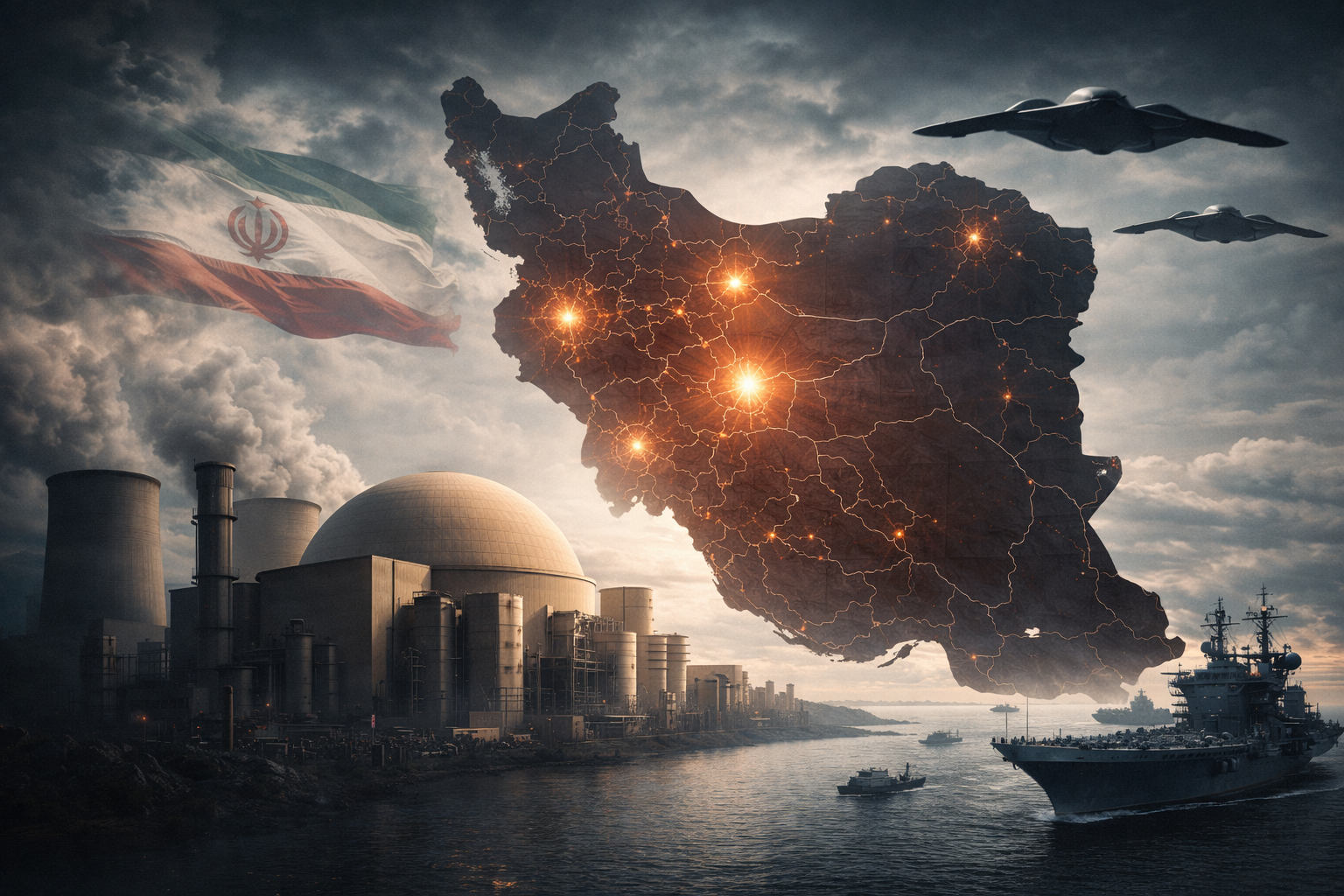
• Operation Epic Fury Launch: On February 28, 2026, President Trump authorized joint U.S.–Israeli military strikes on Iran, initiating major combat operations targeting Iran’s nuclear program, ballistic missile arsenal, naval forces, and proxy networks.
• Missile and Drone Capabilities: U.S. strikes destroyed ballistic missile and drone launch sites, production facilities, and stockpiles, with objectives to eliminate Iran’s missile threats and prevent rebuilding.
• Naval Forces: U.S. forces sank or destroyed 20–43 Iranian naval vessels, including warships and submarines, effectively annihilating most of Iran’s navy.
• Proxy Networks: Strikes degraded Iran’s support for proxy groups including Hezbollah, Houthis, and Shiite militias in Iraq and Syria, aiming to end their ability to arm and fund these organizations.
• Nuclear Threat: Operations targeted underground nuclear facilities such as Fordow with B-2 bombers and bunker-penetrating bombs to prevent Iran from obtaining nuclear weapons.
• IRGC and Command Structures: Strikes destroyed IRGC command and control facilities, military airfields, air defense systems, and naval headquarters.
• Leadership Targeting: Israeli strike reportedly killed Supreme Leader Ali Khamenei, while U.S. operations contributed to broader regime degradation.
• Iranian Military Losses:
- Over 3,000 personnel killed
- 43 naval vessels sunk
- Significant aviation and infrastructure losses

Websites, hosting, email & digital tools for growing brands.