By RockenRoll.com – March 15, 2026
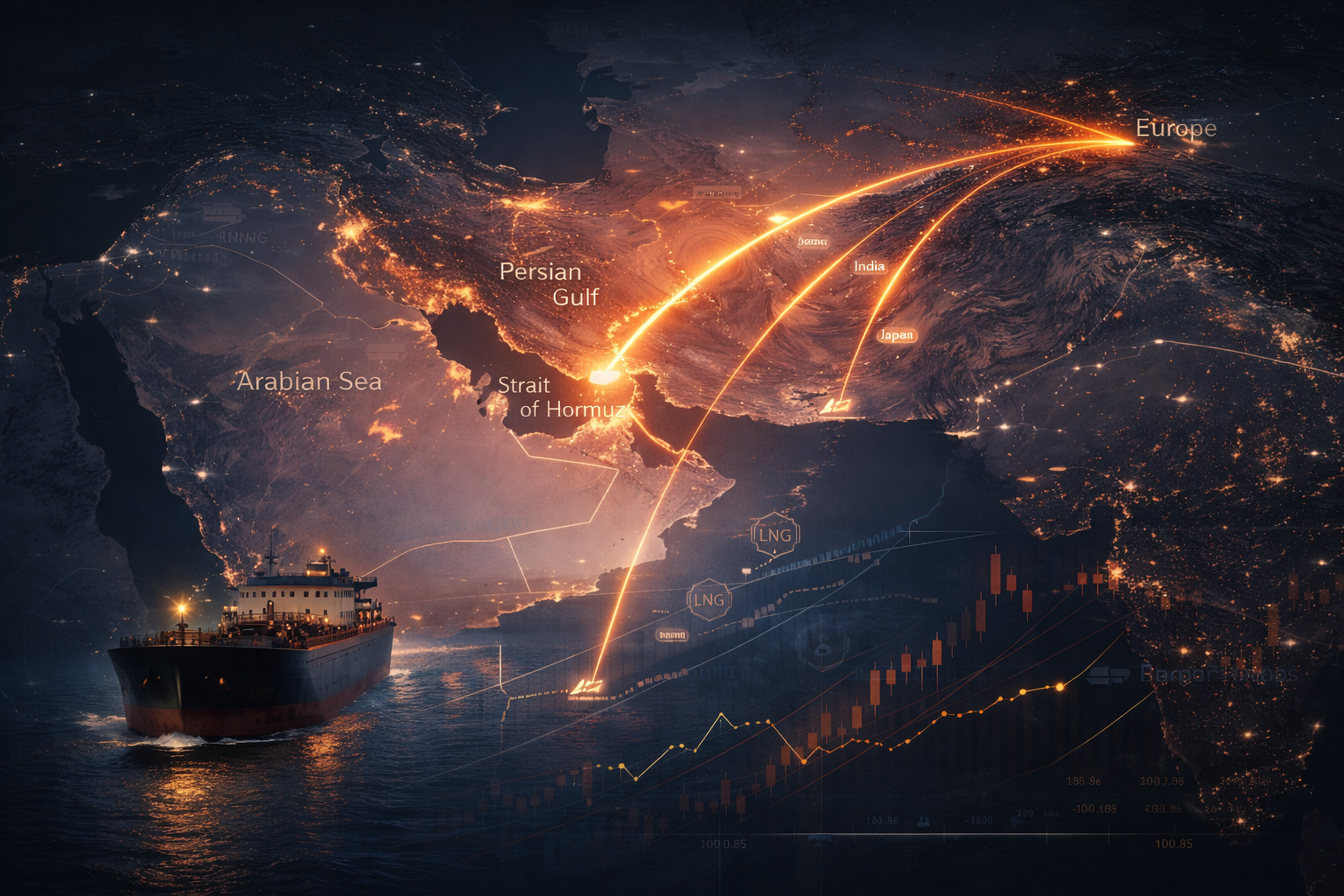
The narrow Strait of Hormuz, the vital chokepoint linking the Persian Gulf to the open ocean, has become the epicenter of a severe global energy crisis. Amid the escalating U.S.-Israel war with Iran, which began in late February 2026, Iran has effectively halted most commercial tanker traffic through the strait by declaring it off-limits to U.S. and allied vessels, launching threats against shipping, and conducting military actions that have driven daily transits from around 150 to near zero.
This disruption affects roughly 20% of the world’s daily oil supply and a similar share of liquefied natural gas (LNG), with the vast majority, over 80% of oil and LNG flows destined for Asian markets. The immediate result has been skyrocketing energy prices, halted shipments, and emergency measures across import-dependent nations. While the crisis hits hardest in Asia, its ripples extend to inflation, supply chains, currencies, and growth worldwide.
China’s Position: Buffered but Pressured
China, the world’s largest oil importer, faces significant strain but appears better positioned than many peers thanks to strategic preparations over the past two decades. Approximately 40-50% of its crude oil imports and about one-third of its LNG typically transit the Strait, primarily from Saudi Arabia, Iraq, the UAE, Qatar, Kuwait, and Iran itself. China purchases nearly all of Iran’s exported oil, and even amid the chaos, limited Iranian shipments, over 11 million barrels tracked since late February have continued toward Chinese ports, often with vessels using special identifiers for safe passage.
To mitigate the shock, China has drawn on massive stockpiles estimated at 900 million to 1.39 billion barrels (covering 90-120+ days of imports), accelerated domestic production, ramped up Russian pipeline supplies, and pushed electrification to reduce oil dependence. Beijing has also halted fuel exports (gasoline, diesel, jet fuel) to prioritize domestic needs, canceling contracts and conserving refining capacity. While short-term buffers delay the pain, prolonged closure could force refinery run cuts, higher input costs for chemicals and manufacturing, and broader inflationary pressures. Experts note that China could withstand months of disruption more easily than neighbors, though “real problems” might emerge in 2-3 months if flows remain blocked.
China’s Efforts
China has been the most direct in urging Iran to allow safe passage:
- Beijing is in ongoing talks with Iranian officials to secure safe transit for oil and LNG tankers (especially from Qatar), according to diplomatic sources and reports from Reuters, Bloomberg, and others.
- Chinese Foreign Ministry spokespeople (e.g., Mao Ning and Guo Jiakun) have publicly called on all parties (including Iran) to cease military operations, avoid escalation, and safeguard navigation in the Strait of Hormuz, emphasizing it as a key international trade route whose stability serves global interests.
- Privately, China has pressed Tehran not to target tankers or key export hubs, with some vessels reportedly changing signals to “Chinese owner” or “all-Chinese crew” to gain safe passage exemptions.
- This reflects China’s frustration with the disruption, as it threatens its energy security despite stockpiles and limited Iranian shipments continuing.
China’s approach is diplomatic and pragmatic rather than confrontational, focusing on protecting its economic lifeline without fully alienating Iran.
Harder Hits Across Asia
Other Asian economies are more immediately vulnerable due to higher reliance on Gulf supplies and shorter effective reserve coverage:
- Japan and South Korea top the risk list, sourcing 80-90% and 60-70% of their crude (respectively) through the Strait, with LNG heavily exposed from Qatar. Both hold substantial reserves (200-250+ days), but surging prices have prompted emergency measures like fuel price caps in South Korea and conservation drives. Japan faces potential stagflation risks from widened trade deficits and yen weakness.
- India relies on about 50% of its crude and two-thirds of LNG via Hormuz, with limited short-term buffers (some estimates as low as 20-74 days for key products). Higher costs threaten inflation, rupee pressure, and growth in a fuel-subsidized economy.
- Smaller importers like Thailand, Philippines, Singapore, Pakistan, and Taiwan face acute shortages, leading to power conservation (e.g., university closures in some cases), emergency powers, and halted economic activity.
Governments across the region are invoking belt-tightening: work-from-home mandates, reduced industrial output, and appeals for energy savings to stretch supplies.
Broader Global Ripples
The crisis extends far beyond energy. Fertilizer trade (one-third global via the Strait) risks spiking food prices, while metals, autos, electronics, batteries, pharmaceuticals, rubber, sugar, and Asian garment supply chains face cascading delays from higher shipping/insurance costs and rerouting around Africa (adding 10-14 days or more).
Oil prices have surged past $100/barrel at peaks (with some scenarios eyeing $130-200 in extreme cases), driving inflation worldwide. The International Energy Agency has released unprecedented reserves (400 million barrels proposed) to ease pressure, but analysts warn of a potential “tipping point” if the closure lasts weeks: demand destruction, refinery shutdowns in Asia, stagflationary drags, and slowed global growth (0.1-0.7% GDP hits modeled in severe cases).
Europe feels secondary effects from diverted supplies and higher LNG costs, while oil exporters like Malaysia may see relative benefits. The U.S. faces pump-price pain but less direct exposure.
In essence, the Strait of Hormuz disruption underscores the fragility of global energy trade. China’s stockpiles and diversification provide a cushion, but Asia as a whole bears the brunt, with risks of inflation, shortages, and economic slowdown spreading if de-escalation doesn’t come soon. The world watches nervously as diplomacy seeks to reopen this critical artery before the shock becomes irreversible.
US and International Pressure
The United States, under President Trump, has been far more aggressive:
- Trump has repeatedly threatened severe military consequences if Iran interferes with oil flows, including potential strikes on remaining infrastructure (e.g., after bombing Kharg Island).
- He has called for an international coalition of warships (urging China, France, Japan, South Korea, UK, and others) to escort vessels and reopen the strait, framing it as a shared burden for affected nations.
- US officials (e.g., Energy Secretary Chris Wright) have discussed naval escorts but noted it’s not yet militarily feasible due to risks, while rejecting quick diplomatic solutions.
- The US views the blockade as retaliation for strikes but demands Iran lift restrictions, with threats of escalated action if it continues.
Iran has responded defiantly: New Supreme Leader Mojtaba Khamenei vowed to keep using the strait closure as leverage, while officials state it’s closed to US/allied ships but selectively open to others (e.g., some Indian, Saudi, or non-hostile vessels have passed). Iranian diplomats (e.g., UN envoy) insist Tehran has no intention of a full permanent blockade, blaming the war for disruptions.
China is quietly but firmly telling/urging Iran to stop disrupting flows for practical reasons, while the US is openly demanding it halt the blockade with military backing threats. No full reopening has occurred yet, but selective passages and diplomacy continue amid high tensions.
RockenRoll.com – Connecting the world through music, culture, and now critical global analysis.

Websites, hosting, email & digital tools for growing brands.