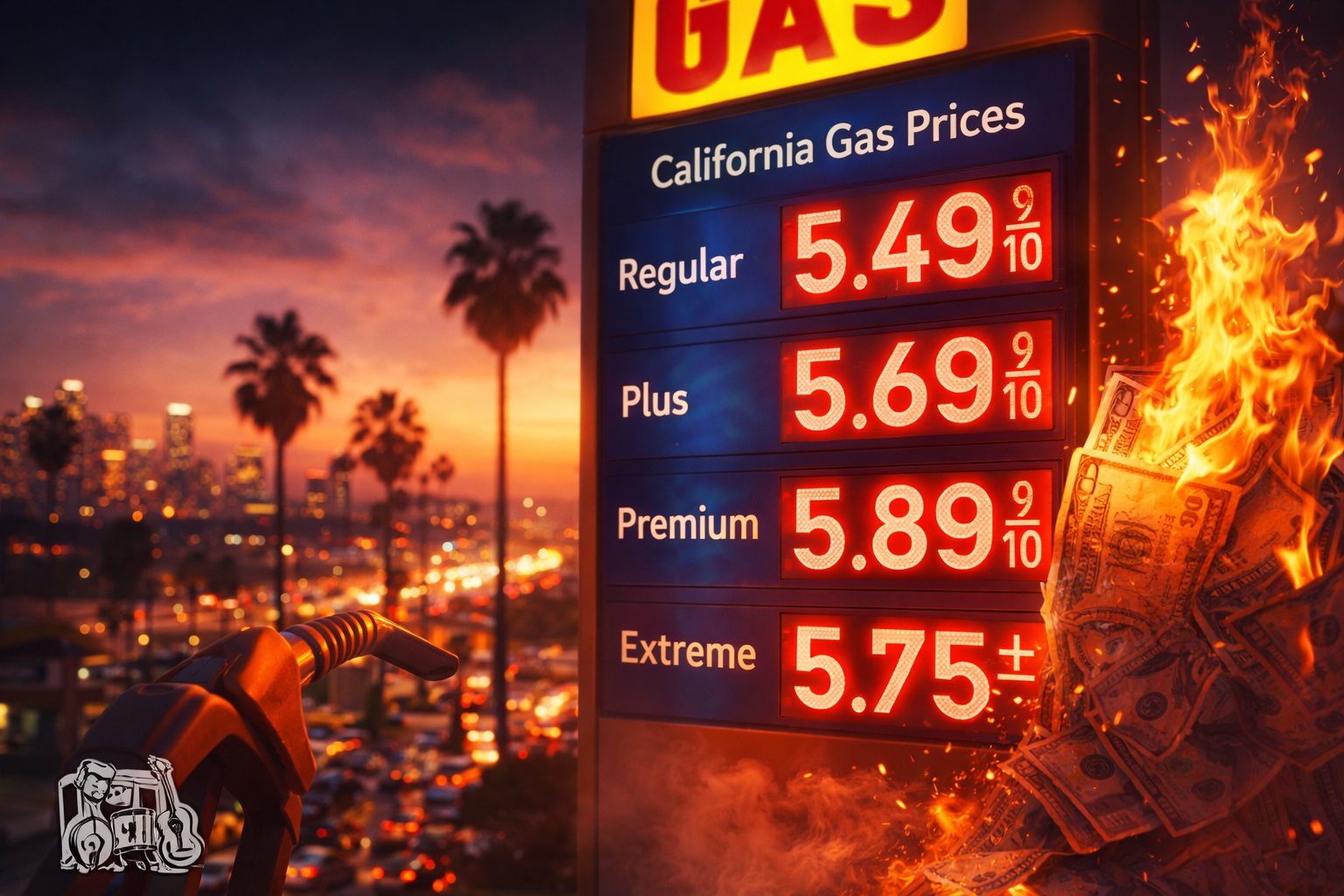
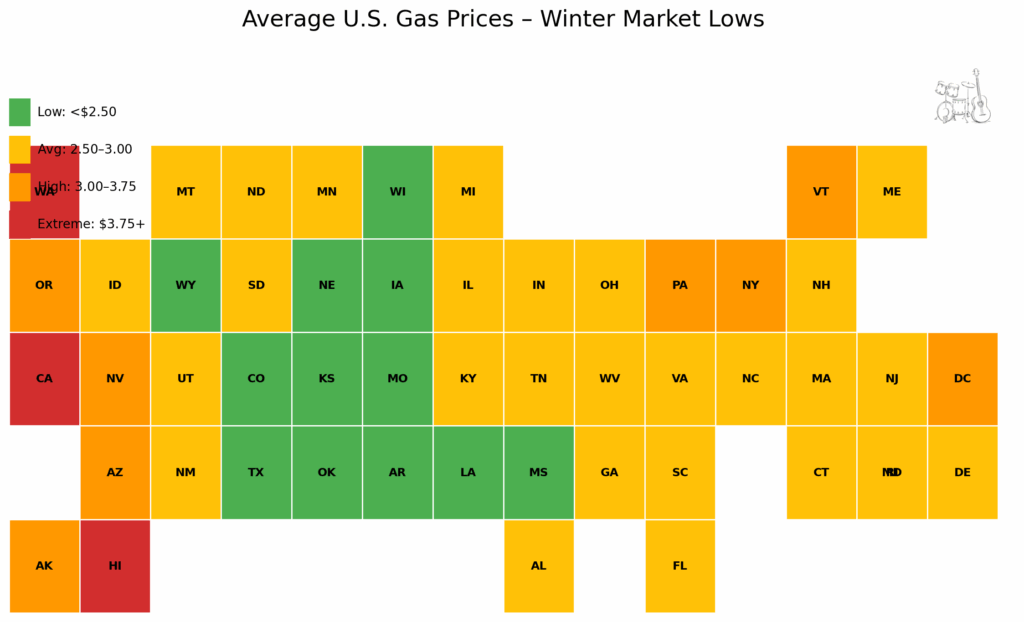
Data sourced from AAA shows the average retail price for regular unleaded gasoline across all 50 states and the District of Columbia. Prices reflect current market conditions, including winter demand lows and crude oil at ~$57/bbl.
| State | Average Price ($/gal) |
|---|---|
| Alabama | 2.539 |
| Alaska | 3.543 |
| Arizona | 3.028 |
| Arkansas | 2.401 |
| California | 4.267 |
| Colorado | 2.350 |
| Connecticut | 2.923 |
| Delaware | 2.841 |
| District of Columbia | 3.166 |
| Florida | 2.827 |
| Georgia | 2.654 |
| Hawaii | 4.412 |
| Idaho | 2.806 |
| Illinois | 2.902 |
| Indiana | 2.788 |
| Iowa | 2.335 |
| Kansas | 2.424 |
| Kentucky | 2.585 |
| Louisiana | 2.461 |
| Maine | 2.933 |
| Maryland | 2.894 |
| Massachusetts | 2.946 |
| Michigan | 2.703 |
| Minnesota | 2.628 |
| Mississippi | 2.453 |
| Missouri | 2.459 |
| Montana | 2.781 |
| Nebraska | 2.489 |
| Nevada | 3.387 |
| New Hampshire | 2.872 |
| New Jersey | 2.821 |
| New Mexico | 2.555 |
| New York | 3.034 |
| North Carolina | 2.617 |
| North Dakota | 2.546 |
| Ohio | 2.573 |
| Oklahoma | 2.226 |
| Oregon | 3.409 |
| Pennsylvania | 3.015 |
| Rhode Island | 2.870 |
| South Carolina | 2.510 |
| South Dakota | 2.554 |
| Tennessee | 2.507 |
| Texas | 2.406 |
| Utah | 2.606 |
| Vermont | 3.040 |
| Virginia | 2.701 |
| Washington | 3.842 |
| West Virginia | 2.803 |
| Wisconsin | 2.423 |
| Wyoming | 2.499 |
Why California Continues to Struggle with High Gas Prices
California’s average of $4.267/gal is the second-highest in the nation (behind Hawaii at $4.412), driven by a combination of high state-imposed costs and structural issues in its fuel market. The state levies some of the highest gasoline taxes and fees in the US, totaling about $1.26 per gallon, including excise taxes, sales taxes, and environmental fees tied to cap-and-trade programs. These taxes are adjusted annually for inflation, with a recent 1.6 cents/gal increase in July 2025.
Adding to this, California’s strict environmental regulations require a unique reformulated gasoline blend (CARB gasoline) to reduce emissions, which is more expensive to produce and limits supply options refiners can’t easily import standard fuel from other states. The state’s Low Carbon Fuel Standard, set to tighten further in 2026, imposes additional costs on oil companies for carbon credits, potentially adding more to pump prices without immediate hikes but through long-term industry investments.
A major factor is the ongoing refinery crisis: Several key refineries are scheduled to close in 2026, including facilities in Benicia and Los Angeles, reducing in-state refining capacity by a significant margin. This could push prices up by $1.21/gal or more as supply tightens, with some projections warning of averages exceeding $5/gal, $8/gal, or even $12/gal in worst-case scenarios. Oil companies like Valero and others are exiting or scaling back operations due to these burdensome regulations, high operating costs, and anti-fossil fuel policies that discourage new investments or expansions. Limited in-state oil drilling hampered by permitting delays, bans on new fracking, and local ordinances further isolates California from cheaper domestic production, forcing reliance on imports and vulnerable supply chains.
While the push toward electric vehicles aims to reduce long-term dependence on gasoline, it hasn’t yet offset these immediate pressures, leaving drivers facing persistently elevated prices compared to the national average of ~$2.82/gal.

Websites, hosting, email & digital tools for growing brands.