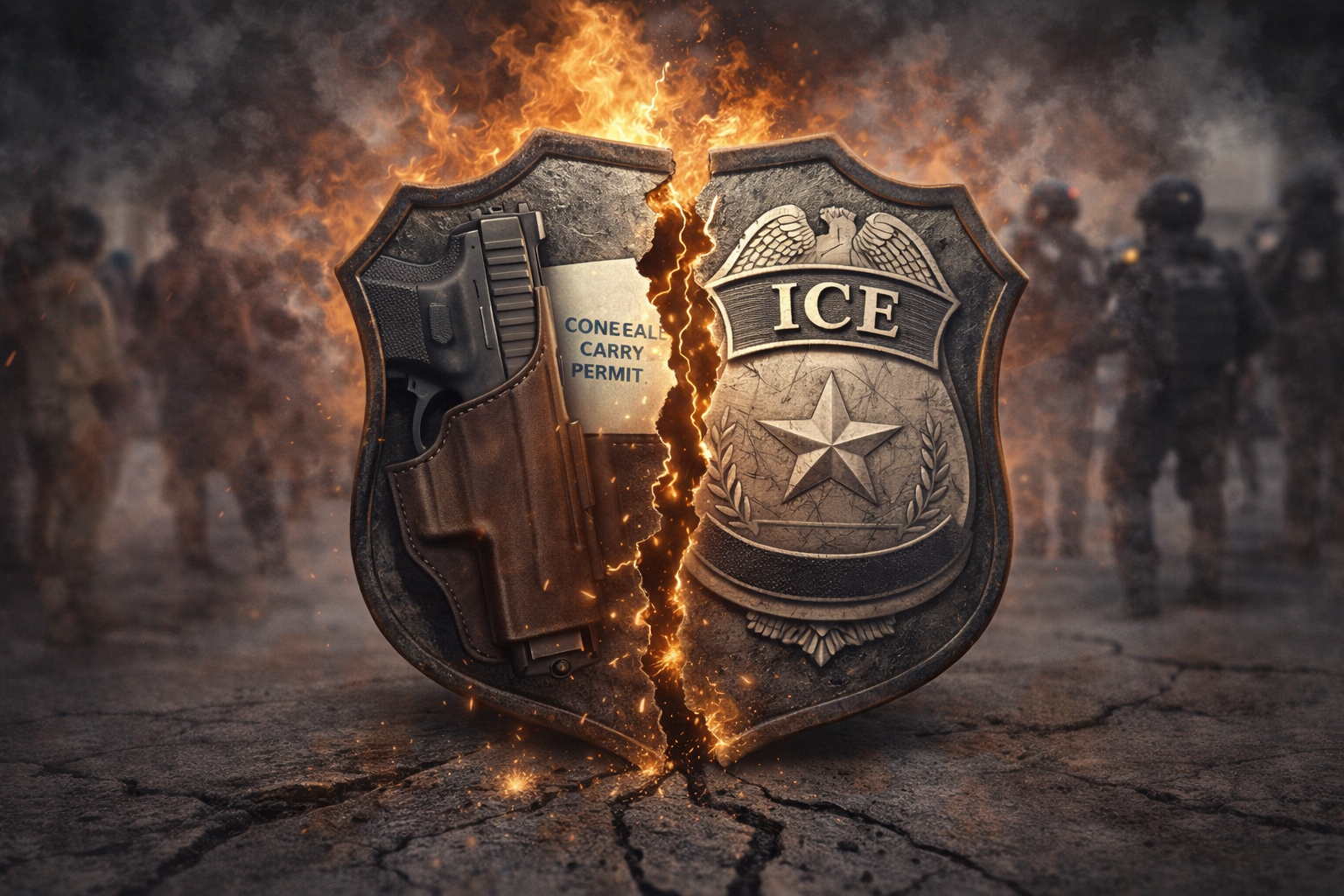
“If he had one gun, how could ICE automatically know he didn’t have another? Law enforcement protocols dictate treating any armed individual as potentially multiply armed until a thorough pat-down or search confirms otherwise—split-second decisions in “the heat of action” don’t allow for certainty, leading to heightened force to neutralize perceived threats. This isn’t hindsight; it’s basic situational awareness that any seasoned gun owner knows: don’t bring a firearm into a powder-keg environment unless you’re prepared for it to be misinterpreted as hostile intent, which here contributed to the chaotic sequence of events ending in at least 10 shots fired while he was already restrained and unarmed.”
If surveyed, how many left-leaning Americans with law enforcement backgrounds would encourage anyone approaching ICE agents in the heat of action should be armed? Such portrayals risk normalizing dangerous choices, ignoring how Pretti’s decision amplified the peril for everyone involved, including himself. Ultimately, this incident serves as a stark reminder that rights come with responsibilities, and failing to exercise common sense can lead to needless tragedy, regardless of legality.
The incident involving Alex Jeffrey Pretti underscores not just the legal aspects of concealed carry but the profound risks of poor judgment in volatile environments. As established, Pretti was legally permitted to carry his 9mm handgun, but injecting it into a high-alert ICE operation marked by recent protests, a prior fatal shooting, and agents actively detaining individuals amid physical confrontations was a recipe for disaster. The scene in downtown Minneapolis on January 23, 2026. Pretti, an ICU nurse from Colorado, was there filming the events a constitutionally protected activity but his choice to step forward and assist a pepper-sprayed bystander while armed transformed a moment of civic engagement into a deadly confrontation. This wasn’t merely an oversight; it was a fundamental lapse in the principles of responsible gun ownership that every permit holder is expected to internalize.
Responsible firearms training, which Pretti would have undergone to obtain his permit, stresses avoiding such scenarios precisely because the presence of a gun can trigger irreversible escalation. Standard courses from organizations like the NRA or state-approved instructors emphasize de-escalation tactics, advising carriers to steer clear of heated protests, law enforcement operations, or any setting where emotions run high and miscommunications are likely. The rationale is simple: a concealed weapon, even if never drawn, introduces an element of unpredictability that can shift the dynamics from verbal or minor physical altercations to life-threatening ones. In Pretti’s case, by intervening while armed, he created a situation where agents, upon discovering the weapon during the tackle, had to operate under the assumption that he might be further armed.
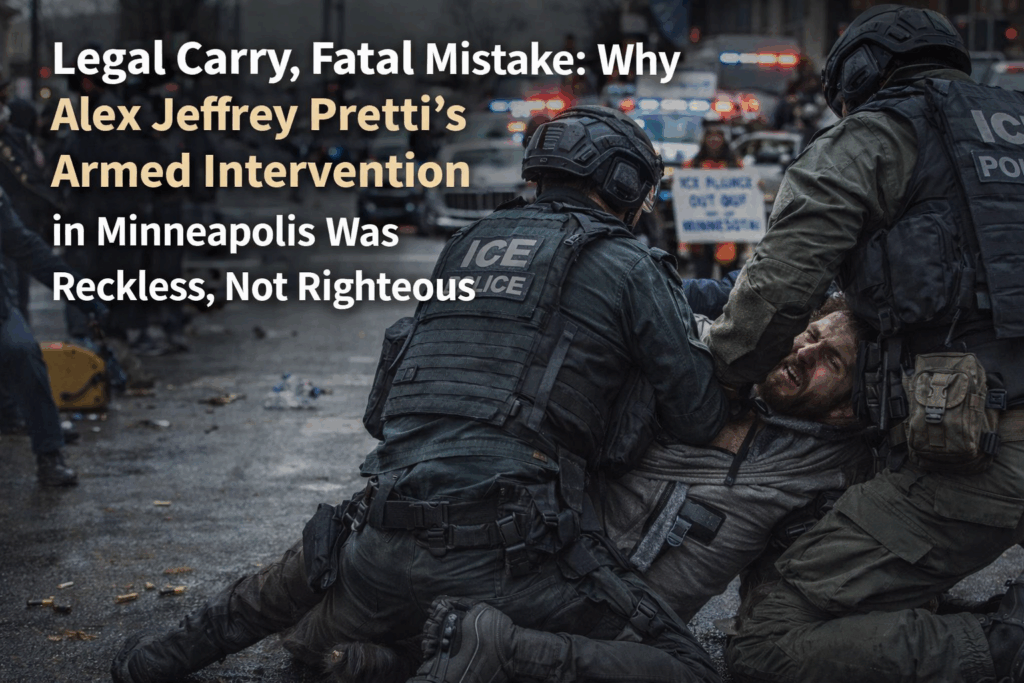
If he had one gun, how could ICE automatically know he didn’t have another? Law enforcement protocols dictate treating any armed individual as potentially multiply armed until a thorough pat-down or search confirms otherwise—split-second decisions in “the heat of action” don’t allow for certainty, leading to heightened force to neutralize perceived threats. This isn’t hindsight; it’s basic situational awareness that any seasoned gun owner knows: don’t bring a firearm into a powder-keg environment unless you’re prepared for it to be misinterpreted as hostile intent, which here contributed to the chaotic sequence of events ending in at least 10 shots fired while he was already restrained and unarmed.
To illustrate the carelessness, consider analogous situations where legal carry turns tragic due to poor context. For instance, in everyday scenarios like road rage incidents or bar altercations, firearms experts universally warn against carrying if alcohol or high emotions are involved, as the gun can escalate a fistfight into a shooting. Similarly, in protest zones especially those involving federal agents equipped with tactical gear and operating under elevated threat levels the mere discovery of a civilian’s weapon can justify an immediate threat assessment. Pretti’s actions ignored this reality; he wasn’t a passive observer but an active participant, positioning himself in the fray. Gun rights advocates, while defending the Second Amendment, often highlight personal responsibility as the cornerstone of safe carry. Publications like Guns & Ammo or training manuals from the US Concealed Carry Association repeatedly stress that legality doesn’t absolve one from prudence carrying in such environments is akin to lighting a match near gasoline, where the potential for explosion outweighs any perceived benefit of self-defense.
This recklessness extends beyond individual error to broader societal implications. Pretti, as a healthcare professional, should have been acutely aware of the human cost of violence, yet his decision amplified risks not just for himself but for bystanders, agents, and the overall protest atmosphere. The aftermath saw intensified scrutiny on ICE tactics, but it also diverted attention from preventable factors on the civilian side. If Pretti had left his firearm secured at home or in his vehicle, the encounter might have ended with at most a brief detention or citation, rather than a hail of bullets. This highlights a critical gap in how some carriers view their rights: as absolute, without regard for context. Experts in tactical training, such as former law enforcement instructors, argue that true preparedness involves knowing when not to carry, emphasizing that a gun in the wrong place can turn you from protector to provocateur.
Media coverage, including from CNN, has leaned on the “legal carry” narrative to highlight federal overreach, but this often sidesteps the recklessness, framing it as an infringement on rights rather than a preventable misstep. Outlets have spotlighted the excessive force agents striking Pretti with a pepper spray canister and firing multiple rounds post-disarmament while downplaying how his armed presence fueled the panic. This selective framing aligns with broader critiques of the Trump administration’s immigration policies, but it risks sending a misleading message that legal equals advisable. By emphasizing Pretti’s permit and First Amendment activities, media portrayals can inadvertently normalize carrying into danger zones, potentially encouraging others to make similar ill-advised choices.
LegalCarry #GunResponsibility #SituationalAwareness #PublicSafety #UseOfForce #LawEnforcement #MediaFraming #ContextMatters #RightsAndResponsibilities #Accountability

Websites, hosting, email & digital tools for growing brands.