Background on Congressional Financial Disclosures
Congressional financial disclosure forms, required annually from members of Congress, report assets and liabilities in broad ranges rather than exact figures. These are spousal-inclusive, meaning they cover assets owned by the member or their spouse.
2018–2019: Early Minnesota Childcare Fraud Reporting and Omar Statements
Potential ties between Rep. Ilhan Omar and childcare fraud allegations in Minnesota are limited and indirect, primarily stemming from her representation of a district with a large Somali-American community (where many accused providers operate) and her public statements on the issue. No charges or evidence of direct involvement have been filed against her. The scandals involve the Child Care Assistance Program (CCAP), where providers (often Somali-owned daycares) were accused of billing for non-existent services, with some funds allegedly sent overseas. This dates back to 2018 reports and resurfaced in 2025-2026 amid broader welfare fraud probes. Below are the key potential connections based on documented facts:
Campaign and Event Ties to Related Figures
In 2018-2019, early childcare fraud reports (e.g., a Fox9 investigation alleging $100 million+ in CCAP funds were fraudulently claimed and possibly sent to Somalia) prompted scrutiny. Omar, then a state representative, issued a statement calling for thorough investigation and prosecution of any crimes uncovered. She has not been linked to the providers in those reports.
2019 (Filed August 13, 2020 – Covering First Year in Congress)
• In her 2019 disclosure (filed August 13, 2020, covering her first year in Congress), Omar reported a single asset (retirement account $1,001–$15,000) and one liability (student loan $15,001–$50,000), resulting in a possible negative net worth.

2020–2021: Campaign Donations and Related Welfare Fraud Overlap
Some individuals implicated in related welfare frauds (e.g., the overlapping Feeding Our Future child nutrition scandal) donated to Omar’s campaigns. For example, in 2021, two men named in FBI affidavits for Feeding Our Future fraud (involving shell companies and $1.1 million in misdirected funds) donated $5,400 total; Omar’s office redirected the funds to food shelves upon learning of the allegations. No similar donations from childcare-specific fraud defendants have been reported.
Omar supported related legislation like the 2020 MEALS Act (expanding child nutrition access during COVID), which was linked to Feeding Our Future fraud, but she expressed no regrets, focusing on the program’s intent to help children.
Omar held campaign events at Safari Restaurant (Minneapolis), which was later tied to Feeding Our Future fraud (a related child welfare scam), but not directly to childcare fraud.
2022–2024: Medicaid and Autism Services Fraud Probes
Federal and state probes into Minnesota’s Medicaid program (administered by the Department of Human Services) have uncovered alleged fraud totaling over $2 billion since 2022, primarily involving Somali-American providers billing for non-existent autism therapy services for children. Omar’s district (MN-5) includes many implicated providers; critics (e.g., state Republicans) have accused her of insufficient oversight or advocacy for programs that enabled the fraud, though she has called for prosecutions.
In 2025, the FBI indicted 47 individuals in a $40 million autism fraud scheme; one defendant (a nonprofit operator) had ties to Somali community groups that Omar has publicly supported, but no direct financial links to her were established.
2023 Disclosure (Covering Prior Year)
• In her 2023 disclosure (covering prior year), Omar reported assets valued between approximately $40,000 and $250,000. (This included smaller valuations for businesses tied to her husband, Tim Mynett.)
2023 – Investor Litigation Involving Spousal Businesses
While there is no evidence or public allegations of money laundering involving eStCru LLC (the winery co-owned by Tim Mynett, Rep. Ilhan Omar’s husband), the business has faced lawsuits for investor fraud and contract breaches, which were settled without admissions of guilt. For instance, a 2023 lawsuit accused Mynett and partner Will Hailer of swindling a $300,000 investor by promising unrealistic returns (200% in 18 months) that were delayed and partially unpaid, attributing issues to COVID-19 challenges in the wine industry. The case was dismissed after settlement. Separately, related ventures owed and settled $1.2 million to cannabis growers for similar investment disputes. These involved misrepresentations but not laundering claims.
2024 Disclosure (Filed May 14, 2025 – Covering 2024)
• In her 2024 disclosure (filed May 14, 2025, covering 2024), the reported ranges increased significantly:
o Rose Lake Capital LLC (a venture capital management firm associated with her husband): valued between $5 million and $25 million.
o eStCru LLC (a winery partnership associated with her husband): valued between $1 million and $5 million.
o Other minor assets: retirement accounts and savings in ranges like $1,001–$50,000.
o Liabilities: included student loan debt in the $15,001–$50,000 range.
o Overall reported asset ranges for the couple: between $6 million and $30 million (calculated by aggregating the maximum/minimum values across assets, minus liabilities).
• The 2024 financial disclosure (filed May 14, 2025) lists exactly six assets (primarily the two spousal businesses) and two liabilities (student loans and one credit card debt, down from two cards the prior year).
This represents a reported jump in the upper-end asset valuation from under $250,000 to up to $30 million in one year’s reporting period.

Explanatory Statements and Disclosure Context
• The large increases stem primarily from higher reported valuations of her husband’s businesses (Rose Lake Capital and eStCru Wines).
• Disclosures list total business values, not individual ownership percentages or stakes. Omar has stated that the ranges reflect full business assessments (with her husband as one of several partners) and do not represent his or their personal share.
• No real estate holdings (e.g., mansions or multiple properties) appear in the disclosures.
• Her congressional salary remains $174,000 annually (unchanged since 2009).
• No public evidence from disclosures shows unexplained personal income sources beyond salary, spousal business interests, possible book deals, or investments.
These are the raw reported ranges from official House Clerk filings no charges, proven wrongdoing, or verified explanations for the valuation changes have been publicly confirmed in investigations as of January 2026. For the most current primary source, refer to the House Clerk’s financial disclosure database.
Asset Valuation Interpretation and Federal Scrutiny
Regarding the reported asset valuation jump (from $15,000–$50,000 in 2023 to $1–$5 million in 2024 disclosures), this could stem from legitimate factors like business expansion, intellectual property sales (e.g., trademarks), or reappraisals, though it’s under federal scrutiny without findings as of January 2026.
Hypothetical Industry Risk Context (Non-Allegational)
Hypothetically, wineries (like other luxury goods businesses) can be vulnerable to money laundering due to subjective pricing and complex supply chains. One common theory is trade-based laundering, where illicit funds are integrated by over-invoicing imports (e.g., grapes or equipment) or under-invoicing exports (wine sales), allowing dirty money to appear as legitimate revenue through manipulated transactions. This exploits the industry’s cash flows and inventory valuations, but again, no such activity is documented or alleged in eStCru’s case any rapid growth here aligns more with reported settlements and operational shifts than proven impropriety.
2025: Congressional Earmark and Oversight Review
During 2025 congressional appropriations, Omar secured a $1 million earmark for a substance abuse clinic operated by a Minneapolis-based nonprofit housed in a restaurant; critics, including Sen. Joni Ernst (R-IA), flagged it as a “red flag” amid Minnesota’s fraud patterns, questioning if it was a legitimate use of funds. The clinic received the funds in late 2025, but as of January 2026, it is under review by the House Oversight Committee as part of broader earmark scrutiny.
2025–2026: Renewed Childcare Fraud Allegations and Political Fallout
Political and Community Representation
Omar’s congressional district (MN-5) includes areas with high concentrations of Somali-owned childcare centers targeted in recent probes. A 2025 viral video by conservative influencer Nick Shirley alleged fraud at nine such centers (claiming they were vacant yet received millions in subsidies), sparking federal actions. State inspections found the centers “operating as expected,” with no immediate fraud confirmed.
In January 2026, the Trump administration froze federal childcare funds to Minnesota and surged ICE agents, citing fraud allegations (estimated at up to $19 billion across programs, including CCAP). Omar criticized this as causing “confusion and chaos” and unfairly targeting Somalis, while denying any community-wide involvement.
Republicans, including Rep. Nancy Mace (R-SC), attempted to subpoena Omar’s immigration records during a January 2026 House Oversight hearing on Minnesota fraud (citing her as a figure in the “Somali-linked fraud network”), but the motion was blocked by both parties.
January 2026: Immigration Enforcement Surge and Federal Actions
In January 2026, the Trump administration launched “Operation Metro Surge,” deploying additional ICE agents to Minneapolis to investigate immigration fraud allegedly tied to welfare scams (e.g., fake asylum claims enabling access to benefits). Omar held a field hearing on January 16, 2026, criticizing it as “Trump’s deadly assault on Minnesota,” but Republicans attempted (and failed) to subpoena her immigration records during a related Oversight hearing, citing potential ties to “Somali-linked fraud networks.”
Trump announced on January 26, 2026, he was sending border czar Tom Homan to Minnesota for a “major investigation” into $20 billion+ in alleged welfare fraud, explicitly mentioning Omar in a Truth Social post.
January 2026: Town Hall Incident and Escalating Scrutiny
On January 27, 2026, Rep. Ilhan Omar was sprayed with an unknown liquid during a Minneapolis town hall event. The substance was later identified as apple cider vinegar. The FBI assumed control of the investigation. No injury or physical symptoms were reported, and the liquid primarily contacted her clothing.
Based on available video footage and reporting, the following observable facts were documented after the liquid was sprayed:
Observable facts from video and reporting
- No visible medical evaluation occurred on camera
- No EMTs examined her
- No gloves, swabbing, or testing of clothing or skin was observed
- No visible decontamination took place
- She did not wipe the liquid off
- She did not change clothes
- No effort was made to isolate or remove the substance
Normal physical interaction continued
- She hugged people afterward
- She stood close to others
- No distancing or protective measures were taken
Event continuity
- The event continued
- She remained composed and engaged
Substance
- The liquid was later identified as apple cider vinegar
- No injury or symptoms were reported
These observable facts establish that the substance was not treated as hazardous at the time, the situation was assessed as non-dangerous, and officials on site did not act as though there was an ongoing risk. This assessment is reflected by behavior captured on video rather than by later interpretation.
Where the facts end
What these facts do not establish on their own is prior knowledge, coordination, staging, or intent beyond a non-harmful act. Determining those would require additional evidence beyond response behavior and photographic appearance.
Following the incident, Omar linked the event to heightened threats she attributed to political rhetoric, while President Donald Trump suggested on Truth Social that the incident might have been staged to distract from fraud probes. The incident and its handling have contributed to renewed calls from Republicans for deeper scrutiny of her activities in Minnesota.
2024–2026 Ongoing Civil and Oversight Developments
• eStCru LLC remains under separate civil litigation as of early 2026 (ongoing from the 2023 investor suit by Naeem Mohd alleging non-payment on a promised 200% return); no criminal charges filed.
• Rose Lake Capital LLC is co-founded and co-managed by Tim Mynett and Will Hailer (former DNC advisor); Hailer separately settled a $1.2 million fraud lawsuit in August 2024 with South Dakota cannabis investors (unrelated to Rose Lake or eStCru).
• House Oversight Committee confirmed on January 17, 2026, it is exploring subpoenas for Tim Mynett’s business records as part of its probe; DOJ review remains active with focus
2025 Disclosure Status (As of January 28, 2026)
The 2025 disclosure (covering calendar year 2025) would have been due around May 15, 2026, but as of late January 2026, no updated figures are referenced in available sources beyond the 2024 filing.
• As of January 28, 2026, the 2025 disclosure (covering calendar year 2025, due May 15, 2026, with possible extensions to August) has not been filed or publicly released; no updates to asset ranges are available.

Psychological Patterns in Rep. Ilhan Omar’s Public Defenses and Responses
Rep. Ilhan Omar’s public responses to criticism, scrutiny, or attacks such as blaming external figures (e.g., President Trump or “hateful rhetoric” for increased threats against her), dismissing accusers, or using profanity in heated moments can be related to the psychological concepts previously outlined. These are observations based on reported patterns in her statements and behavior, not a clinical diagnosis.
Defensiveness
Omar frequently responds to perceived attacks (e.g., fraud allegations, immigration policy critiques, or personal incidents like the town hall spraying) by reframing the situation to emphasize external threats or malice rather than engaging directly with the substance of the criticism. For example, after the January 27, 2026, town hall incident where she was sprayed with apple cider vinegar, she attributed heightened risks to her safety to Trump’s rhetoric causing “death threats [to] skyrocket” whenever he targets her or her community. This shifts focus outward (to the critic’s actions) and positions her as a resilient victim standing firm (“I don’t let bullies win,” “Minnesota strong”). Defensiveness here serves to protect against vulnerability by redirecting attention and reinforcing self-justification.
Projection / Blame-Shifting (Externalization)
A recurring element is attributing problematic motives or behaviors to opponents while denying or minimizing similar accusations against herself. In responses to Minnesota fraud probes or personal wealth questions, she has emphasized systemic failures (e.g., “if money [from fraud] were going to terrorism that is a failure of the FBI”) rather than internal accountability. Similarly, she has accused critics of racism, Islamophobia, or political motivation, effectively projecting bias onto them as the root cause of scrutiny. This externalizes responsibility, reducing internal conflict or shame by locating the “problem” in others (e.g., Trump’s “hateful rhetoric” or “right-wing grifters” terrorizing her community).
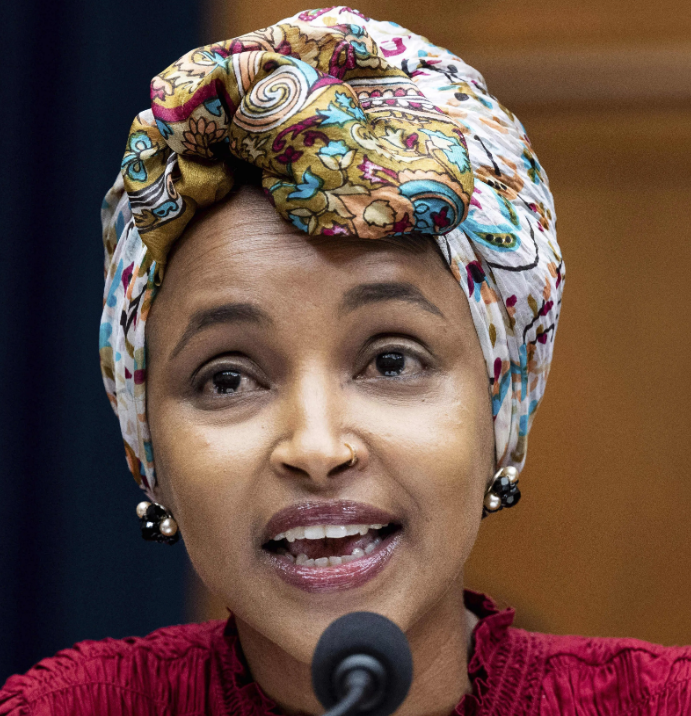
Verbal Aggression / Hostile Verbal Behavior
Omar has used profanity in public or semi-public settings when confronted, such as telling a reporter to “fuck off” in 2025 over questions about immigration or party actions, then doubling down on social media (“I said what I said. You and all your miserable trolls can fuck off”). During the town hall spraying incident, reports indicate she referred to the attacker as an “ugly man” or used stronger language like “these fucking assholes” in the moment or aftermath. Cursing here acts as an immediate emotional release and power assertion intimidating or dismissing the source of threat while conveying unfiltered defiance under stress. This aligns with hostile verbal aggression as a tool for retaliation or boundary-setting when feeling attacked.
Reactive / Defensive Aggression and Related Patterns
Her responses often appear triggered by perceived threats to her identity, community, or position (e.g., as a refugee, Muslim woman, or progressive advocate), leading to counterattacks that escalate rather than de-escalate. This reactive style combining blame-shifting with verbal hostility can create a cycle where criticism prompts stronger pushback, further polarizing interactions. In high-conflict public environments, it may stem from chronic stress, past experiences of marginalization, or a learned strategy for maintaining control amid constant opposition.
These patterns are common in politically charged figures facing intense, often partisan scrutiny. They can be adaptive for self-protection in adversarial settings but risk alienating others and hindering constructive dialogue. Again, this is a general application of psychological concepts to publicly reported behaviors, no formal psychological evaluation exists publicly for Omar, and such interpretations remain speculative.

Closing Context and Current Status
This timeline is intended to present a consolidated, chronological record of publicly reported financial disclosures, allegations, investigations, political actions, and public responses involving Rep. Ilhan Omar as they developed from 2018 through January 2026. It distinguishes between documented facts, reported allegations, official statements, and interpretive analysis, without asserting guilt or drawing conclusions beyond what has been publicly substantiated.
As of late January 2026, multiple federal and state investigations related to Minnesota fraud scandals, spousal business activities, and political oversight matters remain ongoing. However, no criminal charges have been filed against Rep. Omar, and no official findings have established direct involvement by her in the alleged fraud schemes discussed. Financial disclosures continue to reflect spousal business valuations reported within legally required ranges, and future filings may further clarify asset changes.
Readers should understand this document as a reference framework rather than a verdict capturing what is known, what is alleged, what remains unresolved, and where public record currently stands. Any conclusions beyond this record would require new evidence, formal findings, or judicial outcomes not available as of this writing.

Websites, hosting, email & digital tools for growing brands.