By RockenRoll.com May 21, 2026
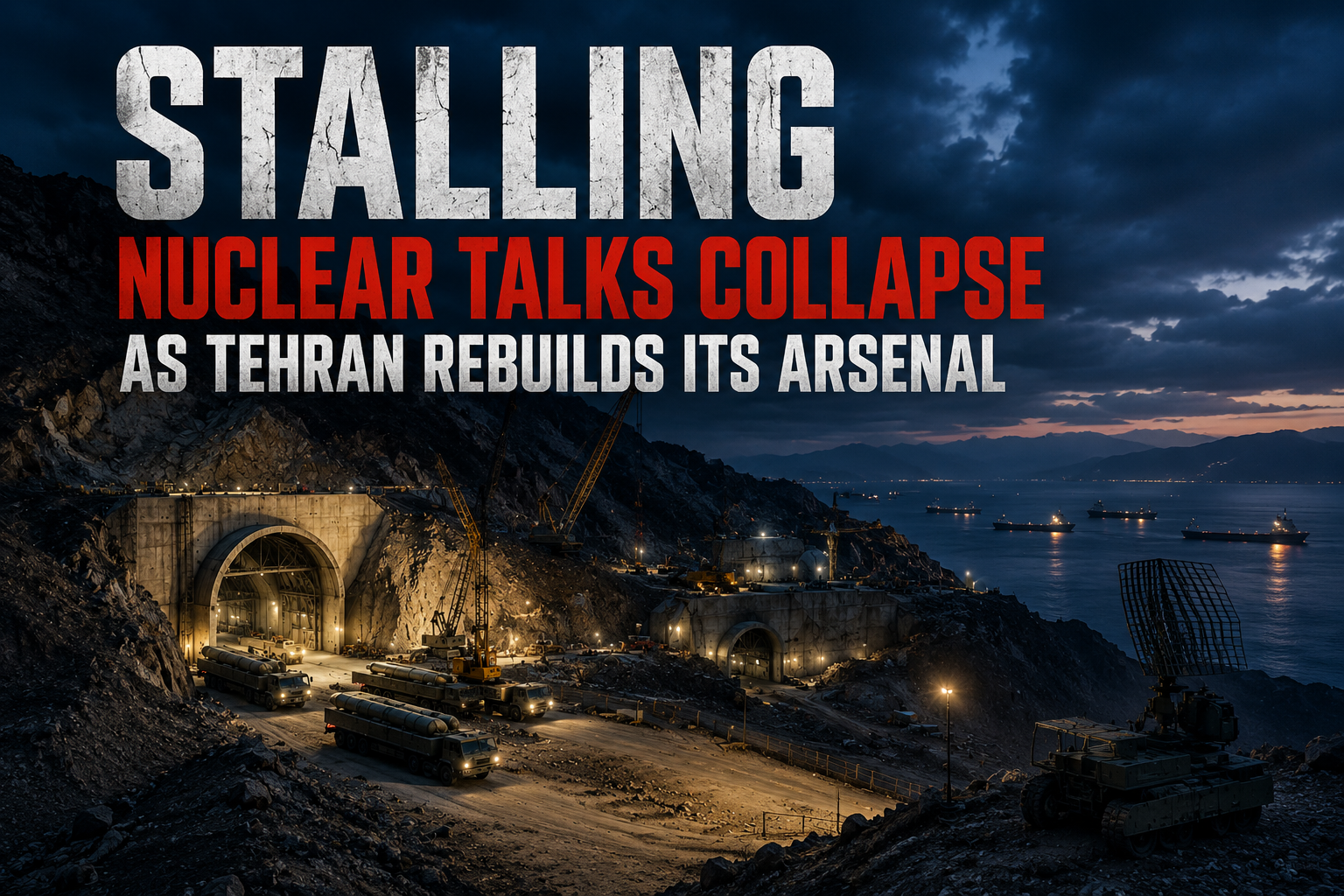
As fragile ceasefires hold amid the shadow of recent conflict, Iran continues its well-worn strategy of diplomatic delay, maximalist demands, and quiet reconstitution of its military capabilities. U.S.-Iran negotiations, mediated through third parties like Oman and Pakistan, have repeatedly stalled, with Tehran offering proposals that sidestep core U.S. demands on its nuclear program while it repairs damaged sites and advances its missile production.
The Negotiation Impasse
Recent rounds of indirect talks highlight a familiar pattern. The U.S., under the Trump administration, has insisted on upfront Iranian concessions: ending high-level uranium enrichment, dismantling key facilities, surrendering its stockpile of highly enriched uranium (estimated at around 400+ kg of 60% enriched material pre-strikes), halting support for regional proxies, and verifiable limits to eliminate any breakout path to a nuclear weapon.
Iran’s responses have consistently fallen short. Tehran has pushed for immediate sanctions relief, opening of the Strait of Hormuz on its terms, and a permanent truce before addressing nuclear issues in separate tracks. U.S. officials describe these as attempts to skirt upfront nuclear compromises, with Iranian negotiators labeled as not authorized by Supreme Leader-level decision-makers to make serious concessions.
Talks collapsed or stalled multiple times in 2026 over these gaps. Iran has called U.S. demands “unrealistic” or “illogical,” while floating ideas like prioritizing Strait access and economic relief over disarmament steps. This mirrors decades of cycles: protracted talks, partial agreements like the JCPOA, followed by violations and reconstitution.
Rebuilding Amid the Pause
While diplomacy drags, satellite imagery and intelligence reports show Iran actively working to recover.
Nuclear Program: Strikes in 2025 significantly damaged sites like Natanz, Fordow, and Isfahan, but did not eliminate the program. Iran retains knowledge, dispersed materials, and underground/tunnel infrastructure. Activity continues at repaired or concealed sites, with new construction noted. The IAEA has faced severe access restrictions, unable to fully account for enriched uranium stockpiles or verify suspension of activities. Experts assess Iran could reconstitute enrichment capabilities in months to a couple of years, depending on the path (overt or covert).
Missiles and Conventional Arms: Recovery here has been faster. Iran rapidly repaired several ballistic missile production and launch sites post-strikes. Despite damage to major facilities (Khojir, Shahroud, etc.), production of dozens of missiles per month has resumed or continued in dispersed workshops. Underground storage and mobile assets preserved significant inventory—estimates suggest thousands remain viable. Imports of precursors and components (often via China) support reconstitution efforts.
This rebuilding occurs under the cover of ceasefire pauses, which Iran uses to reinforce defenses, disperse assets, and repair infrastructure.
Why the Strategy Persists
Iran’s approach serves multiple goals:
- Buying Time: Delays allow recovery from strikes and economic breathing room.
- Leverage: Threats to the Strait of Hormuz, proxies, and nuclear latency provide bargaining power.
- Domestic Regime Stability: Hardliners reject “capitulation,” framing any deal as weakness while portraying resistance as strength.
- Strategic Patience: The regime prioritizes long-term nuclear latency and regional influence over short-term relief.
U.S. and Israeli pressure—through sanctions, credible military threats, and regional alliances—has historically extracted better behavior than unilateral concessions. However, zero trust after years of violations makes verification essential.
Outlook
Iran’s “ridiculous offers” and stalling are not anomalies—they are features of its negotiating doctrine. A durable deal requires verifiable, permanent limits on enrichment and weaponization pathways, coupled with intrusive monitoring. Without concrete actions from Tehran matching its words, skepticism is warranted. Diplomacy remains preferable to perpetual conflict, but effective pressure remains the only proven way to change Iranian calculus. The coming weeks will test whether this cycle breaks or repeats once more.

Websites, hosting, email & digital tools for growing brands.