by RockenRoll.com: September 8, 2026
MESA VERDE, Colorado – The National Park Service is steadily clearing wild horses from Mesa Verde National Park, treating the animals as trespass livestock rather than protected wildlife. Roughly 60 horses have already been removed since late 2021 through low-stress bait trapping, with more operations planned.
Park officials say the horses do not belong under federal law or the park’s founding purpose. Mesa Verde was created to protect Ancestral Pueblo cultural sites cliff dwellings, artifacts, and landscapes. Federal regulations prohibit livestock inside the park, and the 1971 Wild Free-Roaming Horses and Burros Act does not apply to National Park Service lands. That law covers only designated Bureau of Land Management and U.S. Forest Service areas.
“The presence of trespass livestock is inconsistent with the park’s mission to preserve the cultural and natural resources within the park,” the park stated in its official materials. Officials point to documented impacts: soil compaction and trampling on archaeological sites, damage to fragile springs and riparian zones, and competition with native wildlife for scarce water and forage in an arid landscape that has faced repeated drought.
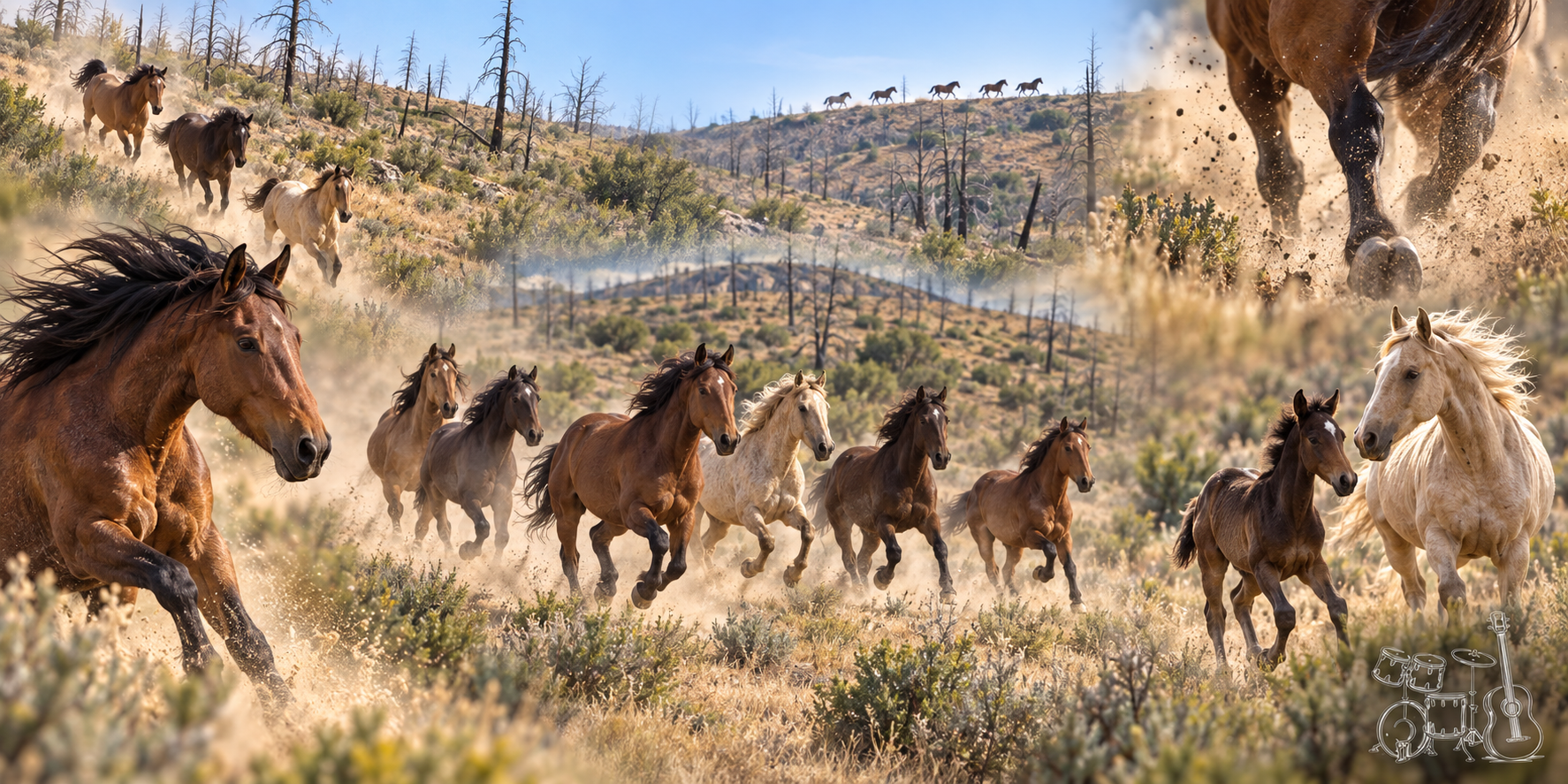
Horses have lived in and around the mesa for generations, descending from animals that drifted in from surrounding private, tribal, and public lands. Population estimates once ran as high as 150; later counts put the number inside the park at roughly 60–80 horses plus a small number of cattle. Boundary fencing has never fully stopped new animals from entering.
After years of planning, public comment, and an environmental assessment, the park adopted a phased removal approach. Primary methods rely on bait trapping rather than helicopter roundups. Park staff, working with low-stress handling experts, condition bands over time by providing food and water near capture pens. Once horses enter the pens, the gates are closed.
What happens after capture
Captured horses are held by the park for up to 30 days. They receive veterinary care as needed, and handling follows guidelines from the American Veterinary Medical Association. Unbranded and unclaimed horses are then transferred to the National Mustang Association Colorado Chapter (NMACO), which takes ownership.
From there, the horses are placed into adoptive homes, with trainers for gentling, or into sanctuaries. Examples from recent years include bands sent to The Wild Horse Refuge in Craig, Colorado; placements at Engler Sanctuary; and individual horses adopted by private owners after training. Older horses and those less suited for adoption are prioritized for sanctuary settings so they can live out their lives with minimal stress. The park and NMACO emphasize that the animals are not sold to slaughter or otherwise destroyed.
As of 2025–2026 updates, removals continue. Superintendent Kayci Cook has noted the park is still working with the National Mustang Association to place the animals. Remaining bands are harder to catch, and officials say the goal remains complete removal over time.
The situation at Mesa Verde highlights a broader Western tension: what to do with free-roaming horses that fall outside the protections of the 1971 Act. At this UNESCO World Heritage site, the park’s answer is clear the horses must go, but through a process designed to give them a second chance outside the park boundaries.

Websites, hosting, email & digital tools for growing brands.